
Helping Women Explore the
Root Causes of
Long-Term Fatigue & Burnout
Hormones | Gut | Iron | Thyroid | Perimenopause

I help working mothers and women who are tired of being tired to finally feel heard because sometimes rest and therapy are not enough.
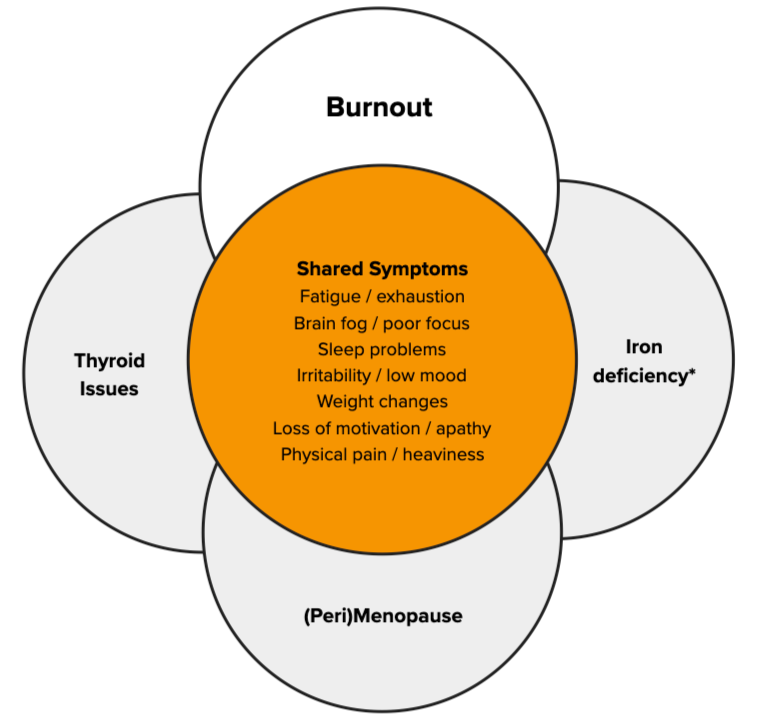
What’s often missed in standard burnout care is that common nutrient deficiencies and
hormonal changes — such as iron deficiency, perimenopause, or thyroid issues — can closely mimic burnout symptoms and quietly hold recovery back.
I’m a specialised burnout coach, certified nutritionist and lifestyle coach, with a PhD in Biomedical Sciences. My work bridges scientific evidence and lived experience, so you’re supported with clarity, care, and respect.
Together, we explore possible biological contributors to your fatigue, prepare for conversations and testing with your doctor, and build a personalised nutrition and lifestyle plan to support genuine recovery.

You’re exhausted in a way that sleep, holidays, or ‘self-care’ don’t fix
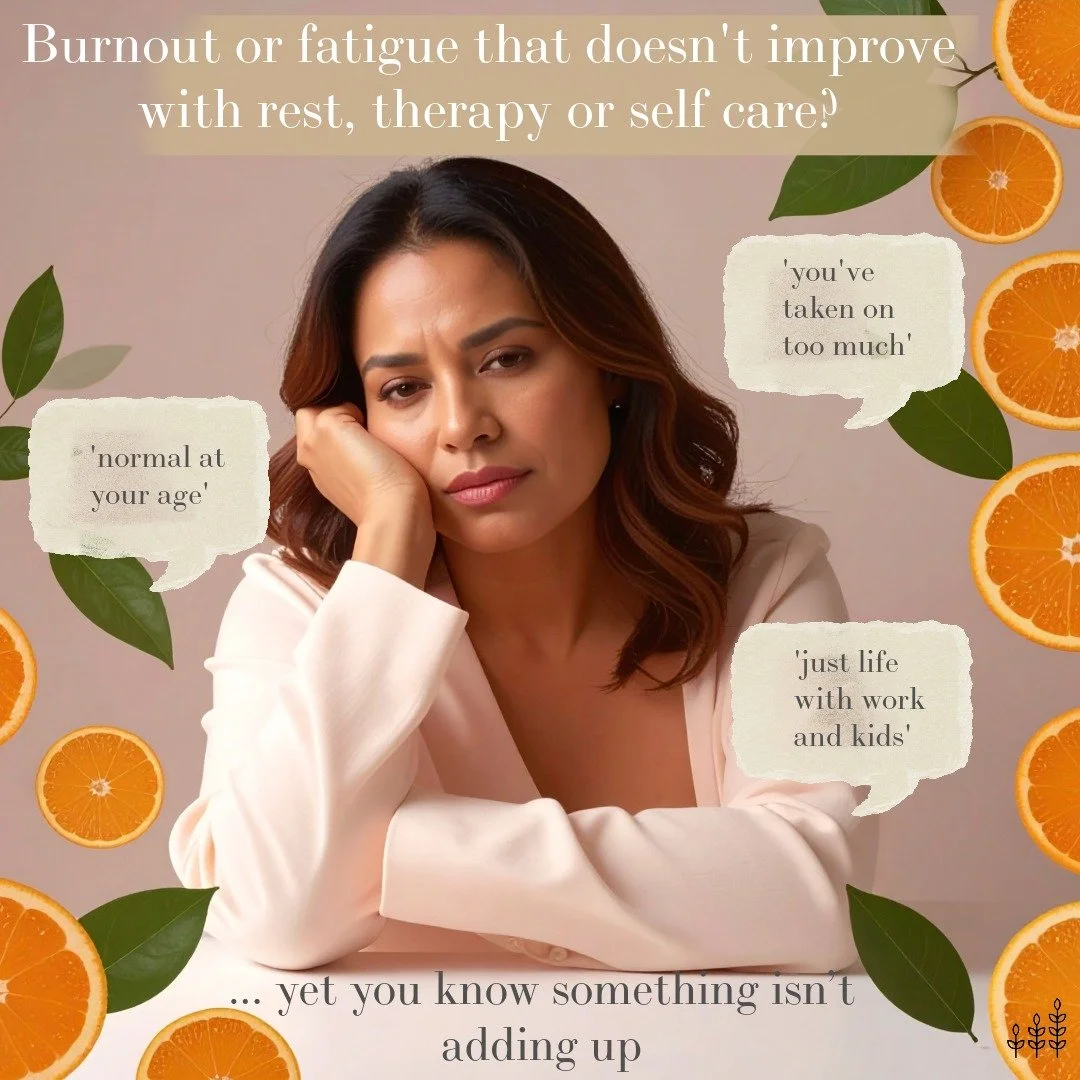
You’ve been told it’s “just stress,” “just life,” or “normal for your age” — yet something doesn’t add up
You’re noticing symptoms beyond burnout: weight gain, insomnia, gut issues, cycle changes, hair loss, mood swings, or new food intolerances
You wonder about things like iron deficiency with anaemia, thyroid issues, hormones out of balance, perimenopause, PCOS, IBS, poor blood sugar control, or diabetes — but aren’t sure how to raise this with your doctor, or which tests to ask for
You feel frustrated, guilty, or disappointed that you haven’t bounced back
Quietly, you ask yourself: Why am I still not better?
Nothing here means you’ve failed.
It often means an important piece of the puzzle hasn’t been explored yet.

I’m Nerys Williams Giuliani — a nutrition and lifestyle coach, scientist, and mother of two. Originally from Wales, I live in Utrecht, the Netherlands since 2009, and work primarily with working mothers and women experiencing long-term fatigue or burnout that hasn’t resolved with rest, therapy, or lifestyle changes alone.
How I Work
I take a root-cause–informed, whole-person approach.
Rather than assuming food or stress management alone will fix everything, I help clients explore whether underlying biological factors — such as iron deficiency, hormonal changes, or thyroid-related issues — may be contributing to their fatigue.
I work alongside medical care, offering clarity, context, and ongoing nutrition and lifestyle support while those pieces are addressed.
My Background
I hold a PhD in Biomedical Sciences, specialising in stem cell therapy for diabetes, and previously worked in corporate biotech for many years. My scientific training shapes how I think about fatigue, recovery, and the body’s ability to adapt and repair.
Why This Work Is Personal
I’ve also been on the other side.
After years of pushing through exhaustion while balancing work and family life, I was labelled as “burnt out.” Lifestyle changes helped somewhat, but it wasn’t until an undiagnosed iron deficiency was identified that recovery became possible.
That experience changed how I see fatigue — and how I support women who sense that something important is being missed.
I noticed that burnout care is focused almost entirely on the mind — therapy, rest, finding what gives you energy — yet when the classical approach fails, women are often left wondering what they did wrong.
I want to raise awareness that for many, a fundamental nutrient or hormone imbalance can make full recovery impossible.
My mission is to help women feel like themselves again as quickly as possible, leaving no stone unturned. To do this, I support women in exploring whether something biological may have been missed — and whether a small amount of medical support (such as iron supplementation, thyroid medication, or HRT) could make a meaningful difference.
Nutrition and lifestyle are still essential for full recovery, but without understanding possible medical needs, many women remain stuck in an exhausted state for far longer than necessary.
My Focus
I support women with long-term fatigue by offering what is often missing: time, clarity, and continuity.
I take the time to go through your full picture — your symptoms, health history, lifestyle, and everything you’ve already tried. Together, we explore possible explanations, discuss available options, and shape a clear, realistic plan.
Because when you’re very tired, doing this alone — researching, organising information, following through — can feel overwhelming. My role is to support you through that process and stay alongside you as you work towards recovery.

1. We slow things down & take stock
We start by taking the time to map out your story — your fatigue, your health history, your lifestyle, and everything you’ve already tried.
We look across all pillars of health:
food | sleep | movement | stress
Many clients tell me this is the first time they feel truly heard.
2. We explore possible biological drivers
Based on your symptoms and history, we look at potential contributors such as:
Iron deficiency
Perimenopause or hormonal changes
Thyroid issues
Nutrient deficiencies
Stress and burnout physiology and recovery capacity
I help you understand which tests may be useful and how to discuss them confidently with your GP, or explore them privately if needed.
3. We build a realistic recovery roadmap
Together, we create a clear plan
This may include:
We co-create clear, supportive notes so you can communicate the most important information clearly and confidently to your doctor
Nutrition guidance personalised to your needs and energy levels
Lifestyle adjustments that are realistic for busy families (not perfection-based)
A central place for your own recipes, session notes and any information we pull together in alignment with your health goals
Creating simple systems so new lifestyle habits don’t rely on willpower or perfect days.
Identifying your support network and agreeing on practical ways they can support your health goals.
WhatsApp support for questions between sessions.
4. Ongoing support & accountability
Recovery doesn’t happen in one conversation.
I stay alongside you — checking in, adjusting the plan, answering questions, and encourage you in a way that’s supportive, not judgemental.
Importantly, I become that other person in your corner — not your partner, not your mother — but someone objective, informed, and on your side.

I’m very grateful for Nerys guidance and support. She listened carefully, helped identify what might be going on with my health, and provided practical meal plans that were easy to follow. I feel more informed, supported, and confident in managing my health. Highly recommend!
— SK (Mum of one, corporate worker, expat)
“Outstanding guidance!
Very informed and committed. Listens carefully and gives tailored suggestions. Helped efficiently in transforming my diet and lifestyle, effortlessly.”
— DD (freelancer, corporate worker, expat)
“Initially I wanted to improve my nutrition and make better choices to fit our family’s busy schedule. Nerys’ holistic approach, made me realise there are many interconnected drivers and to achieve sustainable results we needed to deep dive into sleep and physical
activity, in addition to nutrition for a healthy lifestyle.
I highly recommend Nerys and her approach.”
— SA (mum of two, corporate worker, expat)

Confidence in understanding what’s happening in their body
Clear next steps instead of endless guessing
A sense of support and relief: “I don’t have to figure this out alone”
Regain better presence and energy with their partner and children — emotionally and physically
More stable energy and fewer crashes
Reduced brain fog and greater mental clarity
A roadmap they can continue using long after our work together ends
‘Burnout’: Why Mid-Career Women May Be Getting the Wrong Diagnosis
Sarah*, a 41-year-old marketing executive, spent two years being treated for burnout. She'd tried therapy, meditation apps, and even a sabbatical. Nothing helped. It wasn't until a routine blood test revealed critically low iron stores that the pieces fell into place. Within months of proper treatment, her "burnout" vanished.
Sarah's experience highlights a concerning gap in how we diagnose fatigue in mid-career women. While workplace stress is real, there's growing evidence that biological conditions—particularly iron deficiency, thyroid dysfunction, and perimenopause—are being missed or diagnosed late, leaving women to struggle with treatable medical problems misattributed to psychological causes…
Burnout & Iron Deficiency: The Part of the Story I Was Missing
For a long time, I believed I was simply tired in the way adults are tired. The kind of tired that comes with work, children, responsibility, and getting older. I didn’t think something was wrong — I thought this was just life now.
But looking back, I can see how far from normal it really was.
I would wake up in the morning already exhausted, even after ten hours of sleep. I relied heavily on coffee just to get through the day, hoping each cup might finally do something. By late afternoon — still at work — the fatigue would hit hard. No amount of caffeine could touch it. My body felt heavy, my head foggy, I had hair loss and sometimes dizziness, and I was counting the minutes until I could go home.
I’d get through the evening routine with the kids, put them to bed, and then crash myself — far earlier than I wanted to. Evenings disappeared. There was no space for friends, no energy for hobbies, no exercise, no time for the basic life admin that quietly piles up when you’re always depleted. Everything became about getting through the day.
At some point, I started to accept this as my new normal.
I told myself it was my age. That it was life with kids and work. That maybe this was just how things would be from now on — permanently tired, permanently running on empty. What made it confusing was that I wasn’t neglecting myself. I wasn’t drinking excessively. I ate a healthy diet. I exercised when I could. I was doing all the things you’re supposed to do to “recover.”
And yet, nothing changed…
Burnout or Perimenopause?
Perimenopause can look like fatigue.
It can also look like brain fog, poor sleep, irritability, anxiety, low mood, weight changes, loss of motivation, or a heavy, sluggish feeling in the body.
In other words, it can look exactly like what many women are told is burnout.
This symptom overlap is one of the main reasons perimenopause is often missed or mislabelled as burnout — by women themselves and sometimes by healthcare providers.
When burnout is part of the picture — but not the whole story
For many women, work really is demanding.
Long hours, responsibility, emotional labour, and sustained mental load can lead to genuine work-related burnout. Acknowledging this matters.
At the same time, many women notice that their ability to cope has changed.
Stress feels heavier. Recovery takes longer. Things that were once manageable suddenly aren’t.
This often leads to questions like:
Why does work affect me more than it used to?
Why does burnout feel deeper or harder to recover from this time?